
Radon Testing
What Should You Expect?

Radon Gas Testing
1. Long Term vrs. Short Term
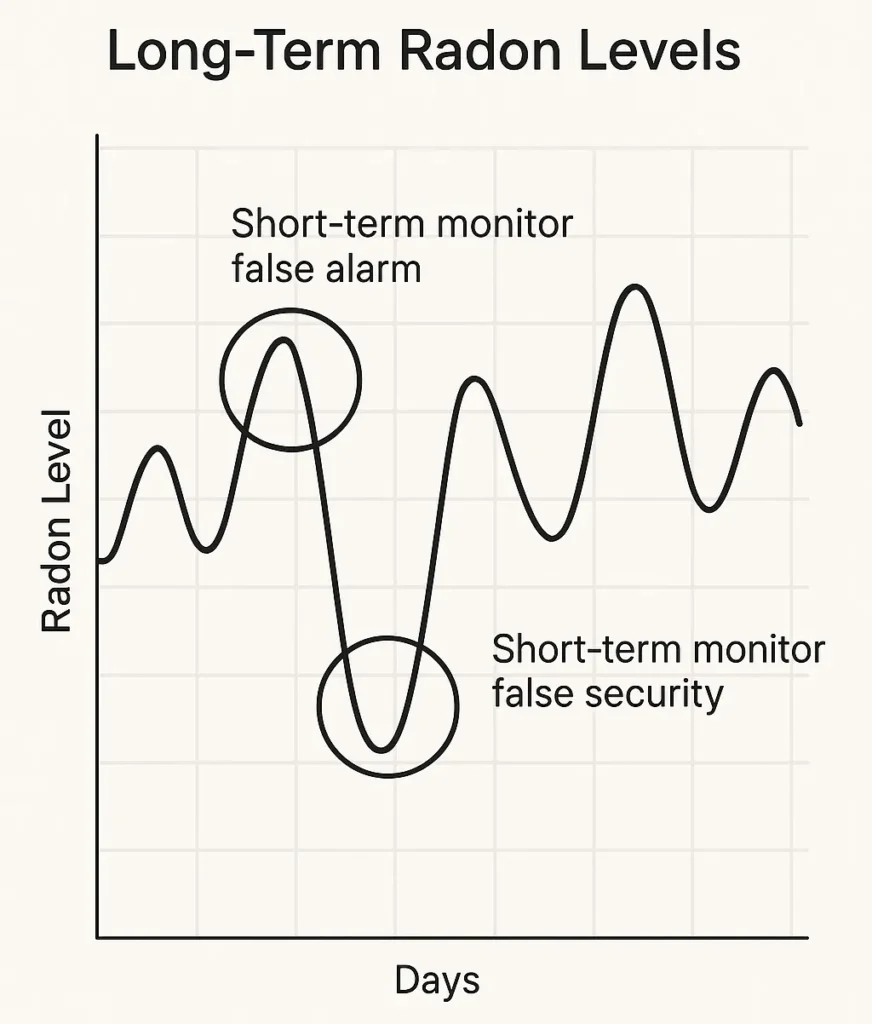
The short-term test usually runs for up to 96 hours. Its primary goal is to take a snapshot of current radon levels. Results can confirm the presence of radon. However, accurate testing is difficult because the distribution of the radon gas is extremely dependent on the season, the current weather patterns, the time of day, and house utilization.
Long-term testing usually lasts between 3 months and one year (one year being the most accurate). This allows measurements taken throughout different seasons to be averaged together to gain a more holistic radon exposure pattern.
2. Passive vrs. Electronic
Electronic systems require power (either corded or batteries). They rely on a number of different measurement devices (electric ion chambers, optical) to produce accurate readings. These results are available. Passive systems (charcoal or alpha track detectors) require no power. They are set in a room for a prescribed about of time, and then sent immediately to a laboratory for analysis. Passive system are arguably the most accurate but monitoring is for only a specific amount of time and lab results may take days to receive.
dependent on the season, the current weather patterns, the time of day, and house utilization.
Long-term testing usually lasts between 3 months and one year (one year being the most accurate). This allows measurements taken throughout different seasons to be averaged together to gain a more holistic radon exposure pattern.
Recommendations
Royal Radon recommends that homeowners purchase electronic monitoring for their homes. Systems should be set up as per manufacturers suggestions. Radon levels should be recorded over a minimum of 3 months (one year is best) for a solid understanding of real exposure levels.
While you should follow the specific instructions for the monitor you purchase, we have assembled some generic instructions for radon testing here.
If you are in need of assistance in picking out a monitoring system, we have assembled a list of five solid products for your consideration here.
Next Steps
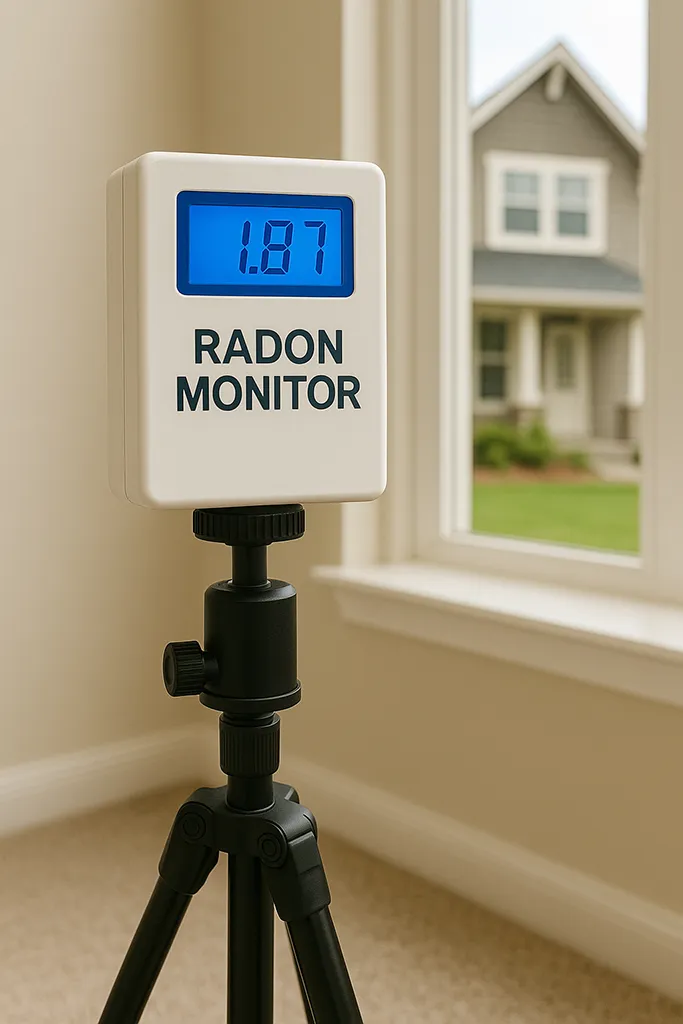
Consider which monitor will best suit your needs. Purchase and install the unit.
If the system is passive, pay strict attention to the test start date and end date. Ensure that the monitor is sent to the lab immediately after the test is completed. If using an electronic sensor, monitor the readings for 3 months or more.
Radon levels are measured in becquerels per cubic metre (Bq/m3). Health Canada’s radon action guideline is 200 Bq/m3, but other jurisdictions have set different limits. The World Health Organization (WHO) recommends a limit of 100 to 300 Bq/m3 and the United States has a limit of 148 Bq/m3.
If the level of radon is above 200 Bq/m3, you should work with a C-NRPP certified professional like Royal Radon to lower the levels in your home. Even if the radon levels are below 200 Bq/m3, you may still want to try to reduce levels to as low as reasonably achievable.