
Radon Reduction In New Builds
What to Expect

Doing It Right: From The Start
Today, because we better understand the threat radon gas brings, builders have begun to ensure that proper airflow exists under new home construction. Your current construction team will ensure that a passive ventilation system is installed as house construction commences (current building code make this a requirement). What do they typically install?
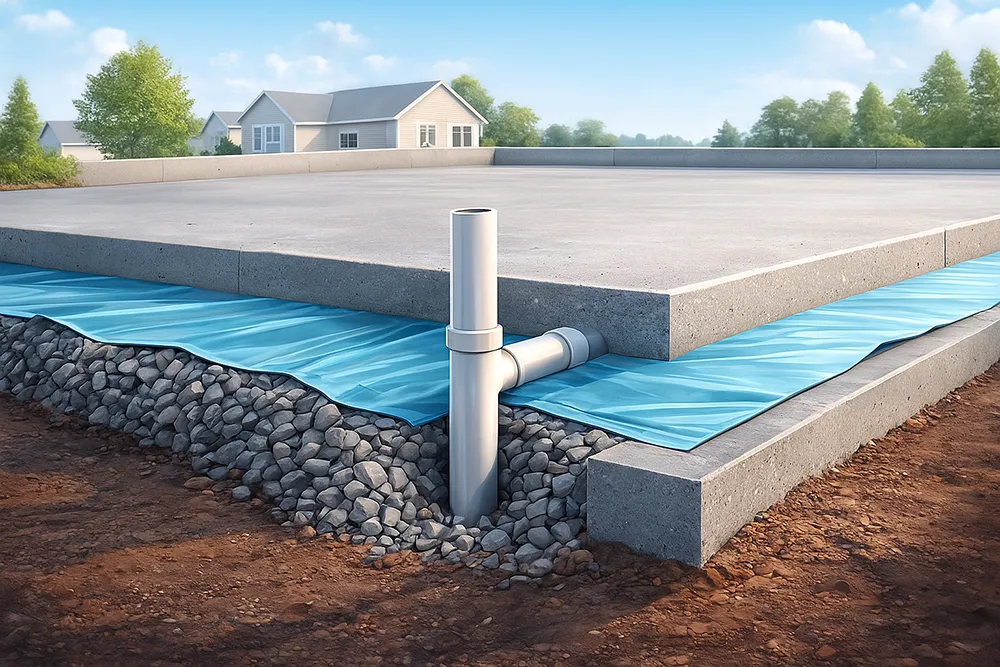
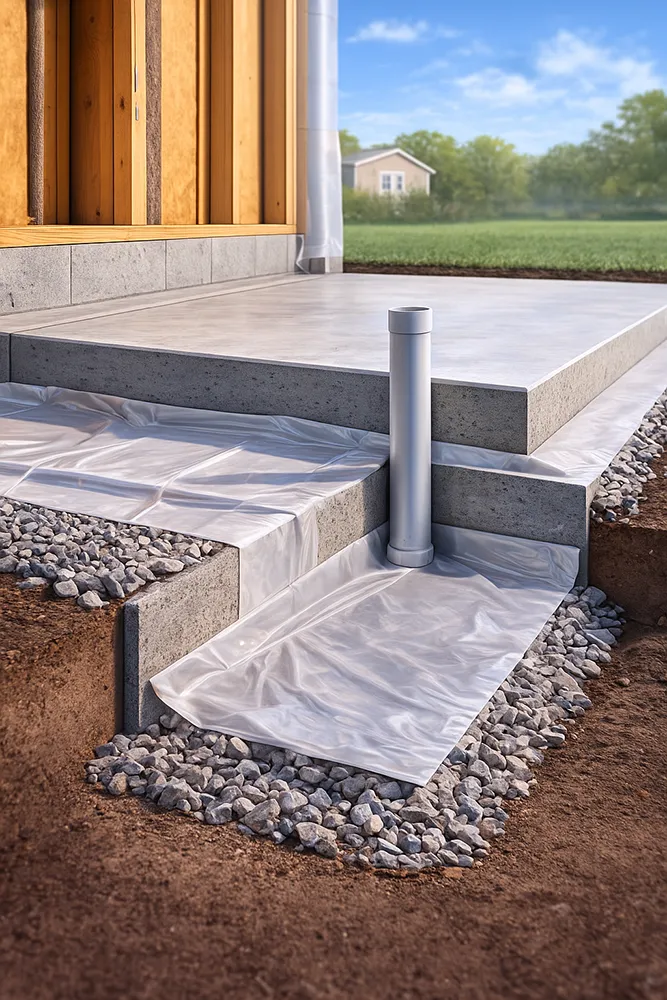
In a new build, the most effective way to deal with radon is to design the house so soil gas is controlled before the slab is poured. The approach typically starts with what’s called a radon-ready foundation. Under the basement or slab-on-grade, the builder installs a gas-permeable layer (typically 100–150 mm of clean granular material) so air can move freely beneath the concrete. On top of this, a heavy polyethylene vapour barrier is laid and carefully sealed at seams, edges, and around plumbing penetrations. This creates a continuous air barrier between the living space and the soil, which both improves energy performance and limits uncontrolled radon entry. Many modern building codes now require these kinds of radon rough-ins or soil-gas control measures in all new low-rise homes, not just in mapped “high-radon” zones.
Next Steps
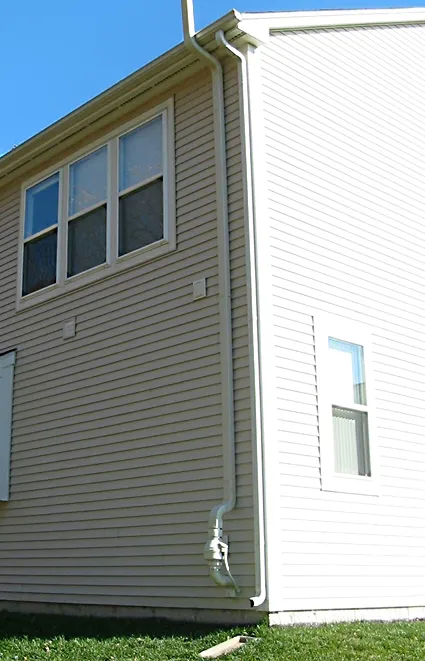
Before the slab is poured, a radon collection point is created by bringing a vertical PVC pipe (usually 75–100 mm / 3–4 in.) into the gas-permeable layer, often with a tee or cross fitting to increase the area it draws from. This pipe is routed up through the conditioned space and out through the roof, forming a passive radon stack. In a passive system, natural stack effect—warm indoor air rising—creates a slight negative pressure in the sub-slab layer, encouraging radon-bearing soil gas to enter the collection point and be discharged above the roofline instead of leaking through random cracks. The slab, sump, control joints, and all service penetrations are sealed so the pathway of least resistance is always toward the stack, not into the basement. These steps correspond to what Canadian and U.S. guidance describe as Level 1–2 protection: a rough-in for active soil depressurization plus a full passive vertical stack.
Nearing The Finish Line
Even if you have a brand new home, you should STILL test for radon.
If testing shows radon levels above the action guideline, the rough-in can be activated by adding an in-line radon fan to the stack (typically in the basement mechanical room), turning the system into full active sub-slab depressurization. The fan runs continuously, creating a stronger and more reliable pressure field under the entire slab, which is considered the most effective radon reduction technique in both new and existing homes. Because the piping, discharge point, and air barrier were built in from day one, activation is a relatively small upgrade instead of a major retrofit that requires coring new holes through finished concrete and finishes. Even with radon-ready construction, homeowners are still advised to perform a long-term radon test during the first heating season and periodically thereafter; codes and standards emphasize that actual radon levels can’t be accurately predicted at the design stage, even for adjacent houses on the same street.
For major renovations—such as finishing a basement or adding an addition on new footings—Royal Radon can apply the same principles: incorporating a gas-permeable layer, air barrier, sealed penetrations, and a radon vent rough-in while the structure is open. This integrated approach means radon control works hand-in-hand with energy efficiency details like airtightness and insulation rather than fighting against them. The end result is a home that is not only easier and cheaper to mitigate if needed, but one that is fundamentally designed with radon management in mind from the very first pour of concrete.
FAQ's
1. My builder says my home already has a "Radon Rough-in." Isn't that enough?
A “rough-in” is simply the plumbing groundwork—it’s like having a house wired for electricity but not yet connected to the grid. In Calgary, code requires a pipe stubbed into the floor and a passive vent. However, it does not guarantee the radon levels will be low. Royal Radon completes the system by ensuring proper suction, sealing the slab, and adding a fan if testing shows it’s necessary.
2. Why should I worry about radon in a brand-new home?
Newer homes are actually more prone to high radon levels because they are built so “tight” for energy efficiency. While this saves on heating bills, it prevents the house from “breathing,” which can cause soil gases like radon to become trapped and concentrated indoors.
3. Can I test for radon as soon as I move in?
While you can do a “short-term” screening, Health Canada recommends a “long-term” test (minimum of 91 days) during the first “heating season” (October to April) that you live in the home. This gives the most accurate picture of your family’s actual exposure when the windows are closed and the furnace is running.
4. What exactly is a "Suction Cage," and do I really need one?
A suction cage is a structural chamber placed under your concrete floor during construction. Think of it as a “super-charger” for your radon system. It ensures that the vacuum created by the system can reach all the way across your foundation. Without it, the system might only pull air from right around the pipe, leaving the rest of your basement unprotected.
5. Will a radon system make my basement loud or drafty?
Not when installed by professionals. By using high-efficiency fans and suction cages to reduce resistance, our systems are remarkably quiet—often quieter than a modern refrigerator. Because the system is sealed, it does not create drafts or affect your home’s indoor temperature.
6. Is radon really a problem in the Calgary area?
Yes. Southern Alberta is a known “hot zone” for radon. Statistics show that roughly 1 in 8 homes in the Calgary area test above the Health Canada action level. Because radon levels are determined by the specific soil and pressure under your individual lot, testing is the only way to know your risk.